
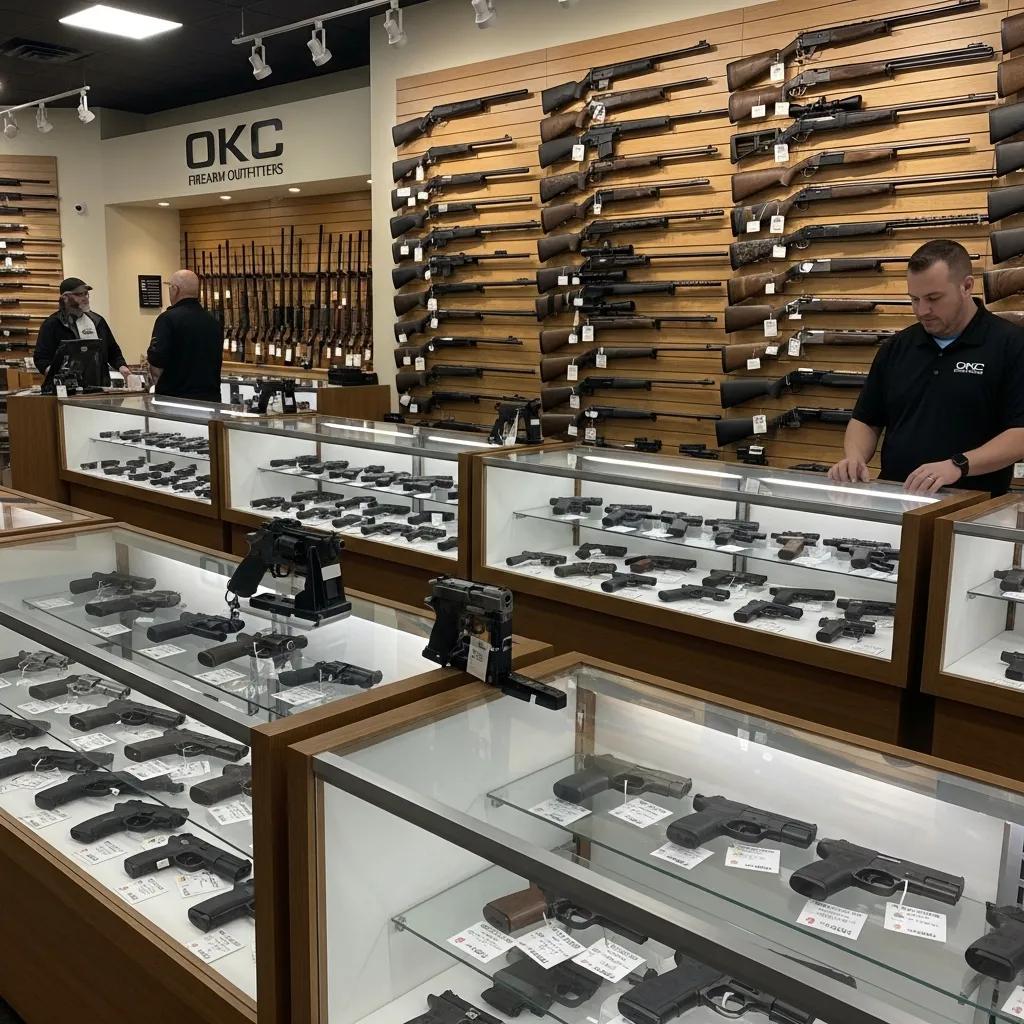
This guide explains where to find handguns, rifles, and shotguns in Oklahoma City, how purchases work under Oklahoma law, and which local services support buyers during acquisition and after-sale maintenance. Readers will learn how to evaluate gun stores, compare new versus used firearms, select a concealed-carry pistol, choose rifles for hunting or sport, and navigate permitless-carry and purchase eligibility as of 2025. The article also outlines practical transaction steps — including FFL transfers and gunsmithing — and points readers toward training and range options that reinforce safe ownership. If you’re shopping for handguns for sale OKC, rifles for sale Oklahoma City, or shotguns for sale OKC, this guide provides actionable comparisons, checklists, and service processes to make purchases smoother. The following sections cover where to buy, popular concealed-carry handguns, rifle types and AR-15 features, legal impacts on purchases, buyer-support services, and places for training and practice.
Top gun stores in Oklahoma City are retail outlets that offer firearms, ammunition, and related accessories while often providing additional services that support lawful purchases; they function as hubs for inventory discovery, purchase processing, and post-sale support. These retailers differ by inventory breadth — from new factory models to vetted used firearms — and by whether they operate an on-site range or partner with local ranges. Evaluating stores on licensing compliance, staff expertise, and visible safety policies helps buyers reduce risk and find the right firearm for their needs. The next paragraphs explain what to look for and how to decide between new and used firearms when shopping locally.
A top gun store in Oklahoma City balances inventory variety, clear compliance with federal and state firearms regulations, and knowledgeable staff who can explain features and safe-handling practices. Key characteristics include transparent return or warranty policies, visible licensing (FFL presence), and staff willing to demonstrate firearm operation and safety protocols. Customers should ask about inventory turnover, how used firearms are inspected, and whether the store refers to gunsmithing or training partners for additional work. These evaluation points naturally lead to a discussion of whether to choose a new or used firearm based on budget, warranty, and condition concerns.
These criteria help buyers narrow choices before deciding between new and used guns.
Choosing new versus used firearms comes down to trade-offs between warranty coverage, price, and the certainty of provenance; new firearms typically include manufacturer warranties while used guns can offer substantial savings when properly inspected. When evaluating a used firearm, perform a function check, inspect the bore and barrel, verify the serial number, and review any documented service or repairs. Ask the seller or retailer about wear on moving parts, magazine condition, and whether parts are factory or aftermarket; if possible, request a safety check by a qualified gunsmith. These inspection steps lead naturally into a short checklist that buyers can use in-store or at a private sale to avoid common pitfalls.
Careful inspection reduces the risk of buying a problematic used firearm and supports informed purchasing decisions.

Concealed carry in Oklahoma City commonly favors compact and subcompact pistols that combine concealability, reliability, and manageable caliber performance, making them practical choices for everyday carry. Selection criteria include overall size and weight, concealment profile, magazine capacity, and mechanical reliability under stress. Practical considerations also include compatible holster options, training frequency for safe drawing and re-holstering, and how permitless carry rules affect public carry decisions. The following subsections list popular carry handguns with quick comparisons and examine legal implications for pistol selection.
Many Oklahoma City carriers select compact 9mm pistols or small-frame revolvers for concealability and controllable recoil; these models balance capacity and comfort for daily carry. Popular choices typically include compact striker-fired 9mm pistols for a favorable capacity-to-size ratio, while some users prefer small revolvers in .38 Special for simplicity and reliability. Below is a quick comparison table that highlights common carry models, their typical calibers, and why they are chosen locally to clarify differences for prospective buyers.
This EAV table summarizes common carry pistols and why they are favored in OKC.
| Handgun Model Category | Typical Caliber | Typical Use / Why Popular |
|---|---|---|
| Compact striker-fired pistol | 9mm | High capacity in small frame; balanced recoil and concealability |
| Subcompact single-stack pistol | 9mm or .380 ACP | Deep concealment, lightweight for daily pocket or waistband carry |
| Small-frame revolver | .38 Special | Simplicity and reliability; preferred by those valuing mechanical ease |
| Compact polymer revolver | .357/.38 | Versatile for those wanting revolver reliability with modern materials |
This comparison helps readers match ergonomic needs with local carry practices and leads into legal considerations that affect how handguns are carried.
Oklahoma implements permitless carry under the Oklahoma Self-Defense Act, meaning many adults who legally possess firearms may carry concealed without a permit, which influences how residents choose carry pistols and accessories. Even with permitless carry in effect, individuals must observe age and eligibility rules and avoid carrying in legally restricted locations, and they should consider voluntary training to reduce legal risk and improve safe handling. Practical guidance recommends using secure holsters that fully cover the trigger guard and practicing draws and re-holstering at a range or with a qualified instructor. Understanding permitless carry’s scope prompts purchasers to prioritize safe storage, appropriate carry gear, and ongoing training.
These legal and safety considerations naturally segue into rifle selection and how law affects larger firearms.

Rifles for sale in Oklahoma City cover a spectrum from bolt-action hunting rifles to semi-automatic sporting rifles and AR-style platforms, each designed to meet specific use cases such as big-game hunting, varmint control, long-range target shooting, and competition. Action type (bolt, lever, semi-auto), caliber selection, barrel length, and optic compatibility drive the rifle’s suitability for a task, and local hunting patterns influence common chamberings and stock configurations. Buyers should match intended use to rifle attributes, considering ergonomics, optics readiness, and parts availability, and the next subsections help choose a rifle based on hunting or sport needs and explain AR-15 features and configurations.
Selecting a rifle begins by defining intended use — target distances, game species, or competition rules — because caliber and action type impact recoil, terminal performance, and magazine capacity. For big-game hunting in regional terrain, medium-to-large calibers with controlled recoil and appropriate bullet construction are typical choices, while varmint and precision target shooters prioritize flat trajectories and match-grade barrels. Consider optics, mounting systems, and accessory compatibility as integral parts of the rifle system rather than optional add-ons. Mapping use-case to hardware ensures that buyers purchase a rifle that matches field conditions and performance expectations.
These selection steps help narrow rifle choices and pave the way to understanding AR-style modularity.
AR-15 rifles and tactical-style semi-automatic platforms are characterized by modularity, interchangeable upper/lower assemblies, multiple barrel and trigger options, and a broad accessory ecosystem including optics, handguards, and stocks. Common configurations vary by caliber (e.g., 5.56 NATO/.223 Rem), barrel length, and intended use such as sporting, competition, or home defense; modular parts allow customization for ergonomics, weight, and handling. Buyers should be aware of component compatibility, the role of barrel profile in accuracy, and the availability of reputable parts and gunsmith support for upgrades. Understanding AR-style modularity clarifies expectations about maintenance, customization, and legal considerations for certain configurations.
| Rifle Type | Typical Caliber | Common Use |
|---|---|---|
| Bolt-action hunting rifle | .270, .30-06, .308 | Big-game hunting and precision long-range shooting |
| Semi-automatic sporting rifle | 5.56/.223, .308 | Competition, target shooting, and versatile sporting use |
| AR-style modular rifle | 5.56/.223, 7.62 variants | Customizable platforms for sport, home defense, and training |
This table underscores how action and caliber align with practical uses and transitions into how law shapes rifle ownership.
Oklahoma law, including the Self-Defense Act and state-adopted policies, affects purchase processes, carrying rules, and who is eligible to buy or possess firearms; understanding these rules is essential for lawful ownership and reduces transactional risk. Buyers must satisfy federal and state eligibility, complete required background checks when purchasing from a licensed dealer, and follow rules for private sales and transfers, which differ in certain cases. The summary table below distills key laws and their practical effects so buyers can quickly reference age thresholds, permitless carry implications, and restricted locations. After legal grounding, the next section explains practical steps buyers follow during purchases and transfers in Oklahoma City.
This table summarizes core Oklahoma rules and their practical effects for prospective buyers.
| Law/Rule | Who It Applies To | Practical Effect |
|---|---|---|
| Permitless carry (Self-Defense Act) | Most adults legally allowed to possess firearms | Allows concealed carry without a permit, subject to disqualifiers and location restrictions |
| Age and purchase eligibility | Buyers of handguns and long guns | Federal and state age thresholds determine whether a buyer can purchase handguns or long guns through dealers |
| Private sale considerations | Individuals in private transfers | Private sales may have different transfer expectations; buyers should verify seller eligibility and consider using an FFL for transfer processing |
This concise mapping clarifies major legal touchpoints and sets the scene for buyer steps and documentation.
The Oklahoma Self-Defense Act, implemented statewide and effective November 1, 2019, establishes permitless carry for eligible adults and clarifies where and how firearms may be carried in public, shaping everyday carry practices. The Act allows those who are not prohibited persons by law to carry concealed firearms without obtaining a state permit, though permitless carry does not eliminate other restrictions, such as prohibitions in certain private or federally controlled spaces. Practical advice for carriers includes carrying identification, understanding locations where firearms are banned, using proper holsters that cover the trigger, and undergoing training to reinforce safe carry and situational awareness. Comprehending these rules helps owners select appropriate carry gear and adopt safe habits that minimize legal and safety risks.
Age and eligibility rules combine federal minimums with state nuances; typically, federal law sets the minimum age for purchasing handguns from licensed dealers at 21 and for most long guns at 18, while background checks and prohibited-person statutes also apply. Prohibited categories include individuals convicted of certain felonies, those adjudicated as mentally incompetent, and people subject to specific protective orders, and buyers should verify documentation requirements prior to purchase. For practical purchasing, buyers should bring government-issued identification, be prepared for a background check timeline, and consult licensed dealers or legal resources for confirmation of eligibility. Having clarity on eligibility reduces the risk of transaction delays and informs decisions about using FFL services for transfers.
These steps transition directly into the services that support buyers during transfers and maintenance.
A range of services supports firearm buyers in Oklahoma City, including FFL transfers, gunsmithing and maintenance, layaway and financing options at some retailers, and referrals to training and range facilities; these services help buyers comply with law and maintain firearms safely. FFL transfers manage legal change-of-possession for sales involving out-of-state sellers or private-party transactions processed through a licensed dealer, while gunsmiths handle inspections, repairs, and customizations. Buyers should verify provider credentials, ask about typical fees and turnaround times, and confirm documentation needs in advance to avoid delays. The next subsections lay out the FFL transfer steps and common gunsmithing services in detail.
FFL transfers are a common mechanism for legally transferring firearms through a licensed dealer, and the process typically involves the seller shipping the firearm to an FFL holder, the buyer completing required paperwork, the dealer conducting a background check, and final handover once approved. Step-by-step, the buyer or seller identifies a receiving FFL, the seller ships the firearm to that FFL, the buyer visits the FFL to present identification and complete federal transfer forms, the dealer runs the National Instant Criminal Background Check System (NICS), and upon approval the buyer pays transfer fees and takes possession. Typical pitfalls include mismatched expectations on fees, insufficient identification, or unclear timelines, so confirming transfer fees and estimated timelines with the FFL in advance minimizes surprise delays. Understanding these steps helps buyers plan purchases from distant sellers, private parties, or online vendors.
Clear communication with the chosen FFL and having correct identification expedites transfers and reduces transactional friction.
Gunsmithing and maintenance services in Oklahoma City typically include routine cleaning, barrel and bore inspection, sight installation, trigger work, replacement parts fitting, and cosmetic refinishing — each service matching different levels of wear or customization desire. Routine maintenance schedules often recommend cleaning after heavy use or annually for lightly used firearms, while more extensive gunsmithing jobs carry longer turnaround times and higher costs; buyers should ask about warranties and parts sourcing. Vetting a gunsmith involves confirming licensing where applicable, checking references, and inquiring about insurance and testing protocols for completed work. Proper maintenance and competent gunsmithing extend firearm life, improve reliability, and support safe operation leading into training and range practice.
These maintenance habits naturally prepare owners for range practice and formal training.
Oklahoma City offers a mix of indoor and outdoor shooting ranges and a variety of training formats that cover basic safety through advanced concealed carry instruction; choosing the right facility and class depends on amenities, instructor credentials, and course objectives. Ranges differ by lane availability, rental firearm policies, instructor availability, and safety procedures, so prospective visitors should evaluate amenities and rules before their first visit. Training classes typically blend classroom legal overview with live-fire exercises and scenario training, and many providers emphasize safe handling, proper storage, and regular practice. The subsections below describe what to look for in ranges and classes and how to prepare for a productive training experience.
When selecting a shooting range in OKC, prioritize facilities with clear safety protocols, well-maintained lanes, available rental firearms if needed, and on-site instruction or certified instructors for classes that include live-fire components. Amenities to consider include the number of lanes, dedicated training areas, equipment rental options, ammo purchase policy, and observed safety rules like mandatory eye and ear protection and range-specific handling procedures. A recommended first-visit plan includes arriving early to review range rules, completing any required waivers, renting appropriate gear if necessary, and starting with supervised instruction if you are new to live fire. Assessing these features before visiting a range ensures a safe, productive session and prepares you for more advanced classes.
This preparation connects directly to the types of safety and carry classes available locally.
Local firearm safety and concealed carry classes commonly include introductory safety courses covering basic firearm mechanics and storage, intermediate courses with live-fire practice, and concealed carry classes that add legal overviews and scenario drills; certifications vary by provider and course content. Typical class structure blends classroom instruction on rules and best practices with range time to practice safe handling and marksmanship, and many courses recommend a minimum number of rounds and follow-up practice sessions to build competence. Students should bring proper identification, their firearm if allowed, eye and ear protection, and a mindset focused on safe, lawful ownership; selecting an instructor with verifiable credentials and positive references enhances learning outcomes. Enrolling in structured courses supports responsible ownership and ongoing skill development for everyday carry and safe storage.
These classes reinforce safe handling and link back to store services and gunsmithing for a complete ownership lifecycle.
Purchasing a firearm in Oklahoma City involves several steps. First, you must ensure you meet the eligibility requirements, including age and background checks. When buying from a licensed dealer, you will need to present valid identification and complete a background check through the National Instant Criminal Background Check System (NICS). If purchasing from a private seller, it’s advisable to use an FFL for the transfer to ensure compliance with state laws. Always verify the seller’s eligibility and understand the specific regulations that apply to your purchase.
Yes, while Oklahoma allows permitless carry, there are specific restrictions on where firearms can be carried. Prohibited locations include schools, government buildings, and private property where firearms are not allowed. It’s essential to be aware of these restrictions to avoid legal issues. Additionally, even with permitless carry, individuals should consider voluntary training to enhance their understanding of safe handling and legal responsibilities associated with carrying a firearm in public.
When selecting a gunsmith, consider their credentials, experience, and customer reviews. Verify that they are licensed and insured, as this can provide peace of mind regarding the quality of their work. Ask about their specialties, turnaround times, and warranty policies on repairs. A good gunsmith should be willing to discuss your needs and provide clear estimates for services. Additionally, checking references or seeking recommendations from fellow firearm owners can help ensure you choose a reputable professional.
Safe storage of firearms is crucial for preventing unauthorized access and accidents. Use a secure gun safe or lockbox that is both sturdy and tamper-proof. Ensure that the safe is stored in a location that is not easily accessible to children or unauthorized individuals. Additionally, consider using trigger locks or cable locks as an extra layer of security. Regularly review your storage practices and educate all household members about firearm safety to promote responsible ownership.
Oklahoma City offers a variety of training classes for new gun owners, including basic firearm safety courses, concealed carry classes, and advanced marksmanship training. Basic courses typically cover firearm mechanics, safe handling, and storage practices, while concealed carry classes include legal overviews and practical exercises. Many training providers also offer live-fire practice sessions to build confidence and competence. It’s important to choose a class that matches your experience level and goals, and to ensure the instructor has the necessary credentials and positive reviews.
Using a Federal Firearms License (FFL) holder for firearm transfers provides several benefits. It ensures compliance with federal and state laws, as FFLs are required to conduct background checks and maintain proper records. This process helps protect both buyers and sellers by verifying eligibility and preventing illegal transactions. Additionally, FFLs can assist with the paperwork involved in private sales, making the transfer smoother and more secure. Utilizing an FFL also provides peace of mind, knowing that the transaction is being handled by a licensed professional.